AI for branding can help a small business create a coordinated visual identity faster, especially when you need a starting point for a logo, colors, fonts, and everyday brand materials. It works best as a practical design workflow, not as a substitute for business strategy, customer research, or legal review. The value depends on how clearly you can describe your business and how carefully you review the results before using them.
For a founder launching on a limited budget, the alternative is often not an agency versus AI. It is usually a usable, consistent brand system versus a collection of mismatched templates, temporary logos, and last-minute social graphics. AI can reduce that gap by giving non-designers a structured way to make visual choices.
What AI for Branding Can Actually Help With
Branding covers more than a logo, but not every part of branding can be automated well. AI-assisted tools are generally most useful for the visual identity layer: turning basic inputs such as a business name, industry, style preferences, and color direction into coordinated design options.
A practical AI branding workflow may help you explore logo concepts, adjust a selected design, create a color palette, pair fonts, and preview how those choices look across common materials. That matters because a logo viewed by itself can seem fine, then feel disconnected once it appears in a website header, Instagram post, business card, or email signature.
The strongest outcome is not simply a logo file. It is a small, repeatable system that tells you which logo version to use, what colors to apply, which fonts to keep consistent, and how the brand should appear in digital and print settings.
AI is less equipped to answer strategic questions such as why customers should choose your business, which audience segment to prioritize, or how your brand should differ from a deeply researched competitor set. It can generate visual directions from your input, but it cannot replace the judgment required to set that direction.
Start With Clear Inputs, Not Random Prompts
The quality of an AI-generated identity depends heavily on the brief behind it. Before choosing styles, write down a short description of what you sell, who you serve, and the impression you want to create.
For example, a bookkeeping consultant may need a visual identity that feels organized, approachable, and credible. A children’s party business may need something bright and playful without becoming difficult to read. These are not universal design rules. They are useful starting criteria that help you evaluate whether a concept fits the business.
Try to define three things before generating options:
- Your primary customer and where they are likely to encounter your brand
- The practical places your identity needs to work, such as a website, product label, storefront sign, proposal, or social profile
- A few descriptive words that reflect the intended feel, such as calm, bold, refined, friendly, technical, or handmade
Avoid treating style labels as a complete brief. Saying that you want a “modern” logo is too broad on its own. Explain what your business does and what you want people to understand at first glance. A good brief gives you a better basis for selecting rather than merely reacting to visual options.
Choose a Direction That Works Beyond the Logo
When reviewing logo concepts, look at function before personal taste. A design should be recognizable at small sizes, readable in one color, and suitable for the places where you expect to use it. Fine lines, tiny lettering, and complex details may look appealing in a large preview but become unclear in a browser tab, profile image, stamp, or printed card.
You should also consider whether the design can support a broader identity. A restaurant might need a logo that works on menus, takeout packaging, signage, and social posts. A consultant may rely more on a website, presentation cover, invoice, and email signature. The same logo treatment will not suit every situation.
This is where brand previews are useful. Seeing a visual direction applied to realistic touchpoints can reveal whether the colors feel balanced, whether the typography remains readable, and whether the system feels coherent. It is easier to make changes at this stage than after you have ordered printed materials or updated multiple accounts.
Color Should Have a Job
A compact palette is generally easier for a small business to use consistently than a large collection of accent colors. Start with a main brand color, a supporting color, and neutral tones for backgrounds and text. Then check contrast carefully, particularly when placing text over color or images.
Color can shape the mood of an identity, but it does not guarantee trust, sales, or any specific customer response. The better question is whether the colors suit your category, feel appropriate for your audience, and remain usable across your actual materials.
Fonts Need to Be Readable in Real Use
Font pairing often becomes complicated when a business tries to use too many typefaces. For most early-stage brands, one font for headlines and one for body text is enough. If the logo uses a distinctive type style, that does not mean the same style should be used for every paragraph on the website.
Prioritize readability for menus, service descriptions, product details, and contact information. A font can look expressive in a logo while still being a poor choice for small text. Test it at the size your customers will actually see.
Build the Brand Kit You Will Use First
A brand kit should match your immediate operating needs. If you are preparing to launch an online service, a usable logo, color and font guidance, profile graphics, website assets, and an email signature may be more valuable than a large set of print materials. If you run a local service business, you may also need business cards, stationery, a letterhead, or a simple sign-ready logo variation.
At minimum, organize the final files and guidance so you can answer common questions without guessing: Which logo is for a dark background? Which colors are approved? What font should be used in a proposal? Which image should be used as the social profile icon?
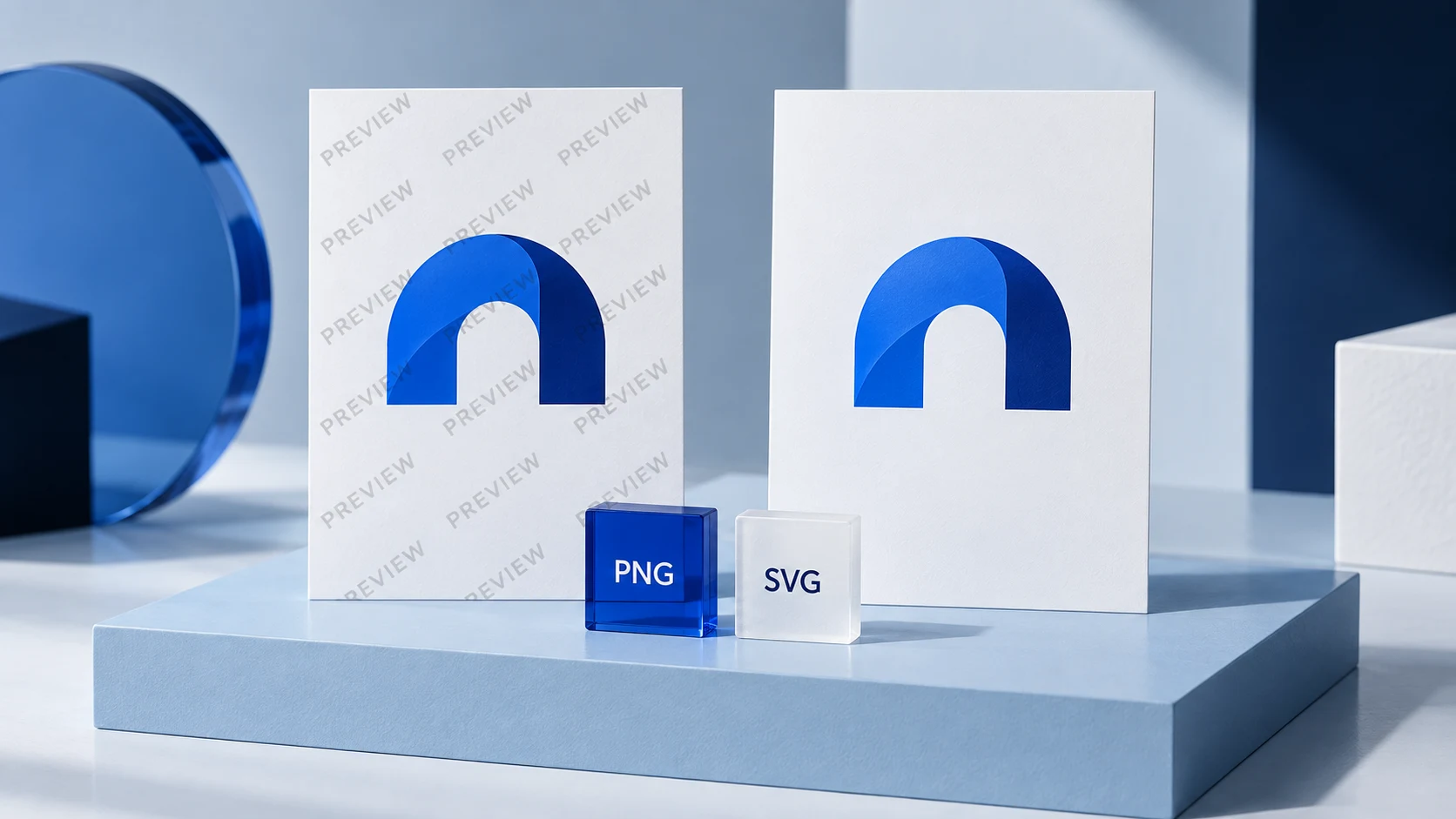
File types matter too. You will often need a high-resolution image file for everyday digital use and a scalable vector file for professional printing or larger applications. The exact format requirements depend on the vendor and use case, so ask your printer, web developer, or sign maker what they need before sending files.
Ficonica is one option for entrepreneurs who want to move from a business description to logo concepts, colors, fonts, previews, guidelines, and downloadable brand materials in one workflow. It may be a practical fit when speed, clarity, and a coordinated starting system are the priority. Before purchasing any AI branding product, review its current deliverables and terms to confirm they match your intended use.
Where AI Branding Has Limits
AI-assisted branding is not automatically the right choice for every business. A freelance designer, specialist studio, or branding agency may be more appropriate if your project needs extensive customer research, original illustration, packaging architecture, a detailed naming process, or a highly customized art direction.
A human designer can also be especially helpful when you have a complex existing identity to refine rather than a new business needing a clear starting point. Their role is not only to make a logo. It can include asking difficult questions, interpreting feedback, developing original concepts, and managing unusual production requirements.
There is also a legal distinction to keep clear. Creating a logo or choosing a name does not confirm that the name or design is available to use, protect, or register. If legal availability, trademark registration, or ownership questions are central to your launch, seek qualified legal guidance rather than relying on a branding tool.
A Simple Review Before You Publish Anything
Before applying your new identity everywhere, test it in the places that matter most. Put the logo at a small size. View the colors on a phone screen. Check whether text is easy to read. Print a basic page if print is part of your business. Ask whether a person who has never heard of you can understand the business name and category quickly.
Then choose a few core touchpoints and update them together: your website or landing page, social profile, email signature, proposal or invoice template, and any customer-facing document you use regularly. Consistency is built through repetition, not by creating dozens of assets you never open.
A practical brand does not need to be finished forever before you launch. It needs to be clear enough to use confidently, flexible enough to grow with the business, and organized enough that every new piece of communication starts from the same visual foundation.