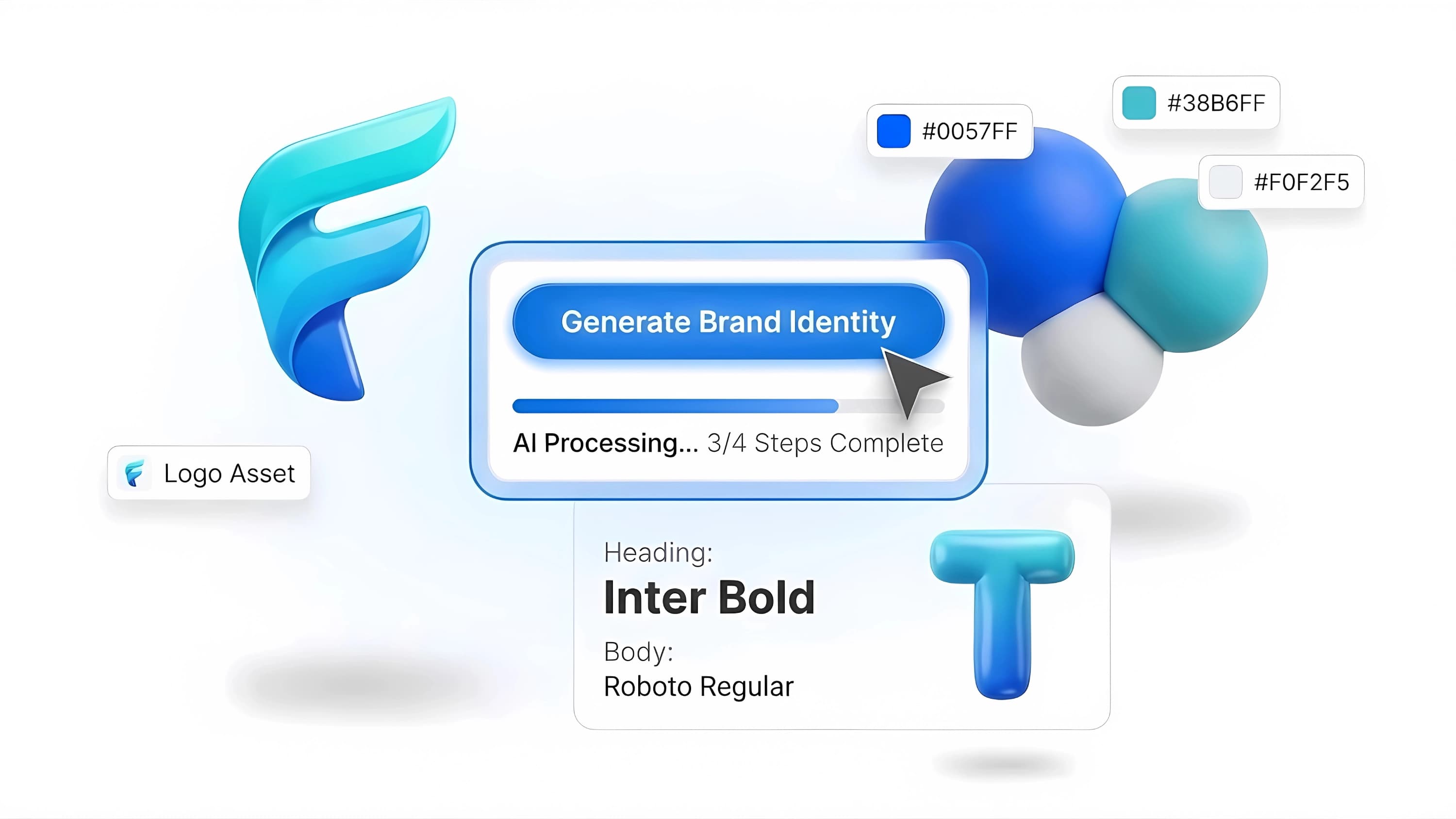
Yes, AI can generate business branding, especially the visual building blocks a new or small business needs to look coordinated from day one. It can help create logo directions, color palettes, font pairings, and brand assets quickly. But it cannot independently define your business strategy, validate your market position, or confirm that a name or logo is legally available.
For founders who need a practical starting point, AI can reduce the blank-page problem. The value comes from using it as a structured design assistant, then making deliberate decisions about what represents your business and where the brand will appear.
What AI can generate for a business brand
Business branding is often used to mean everything from a company name to a full marketing plan. In practice, an AI branding tool is generally most useful for visual identity: the recognizable design system people see across your website, social profiles, invoices, packaging, presentations, and printed materials.
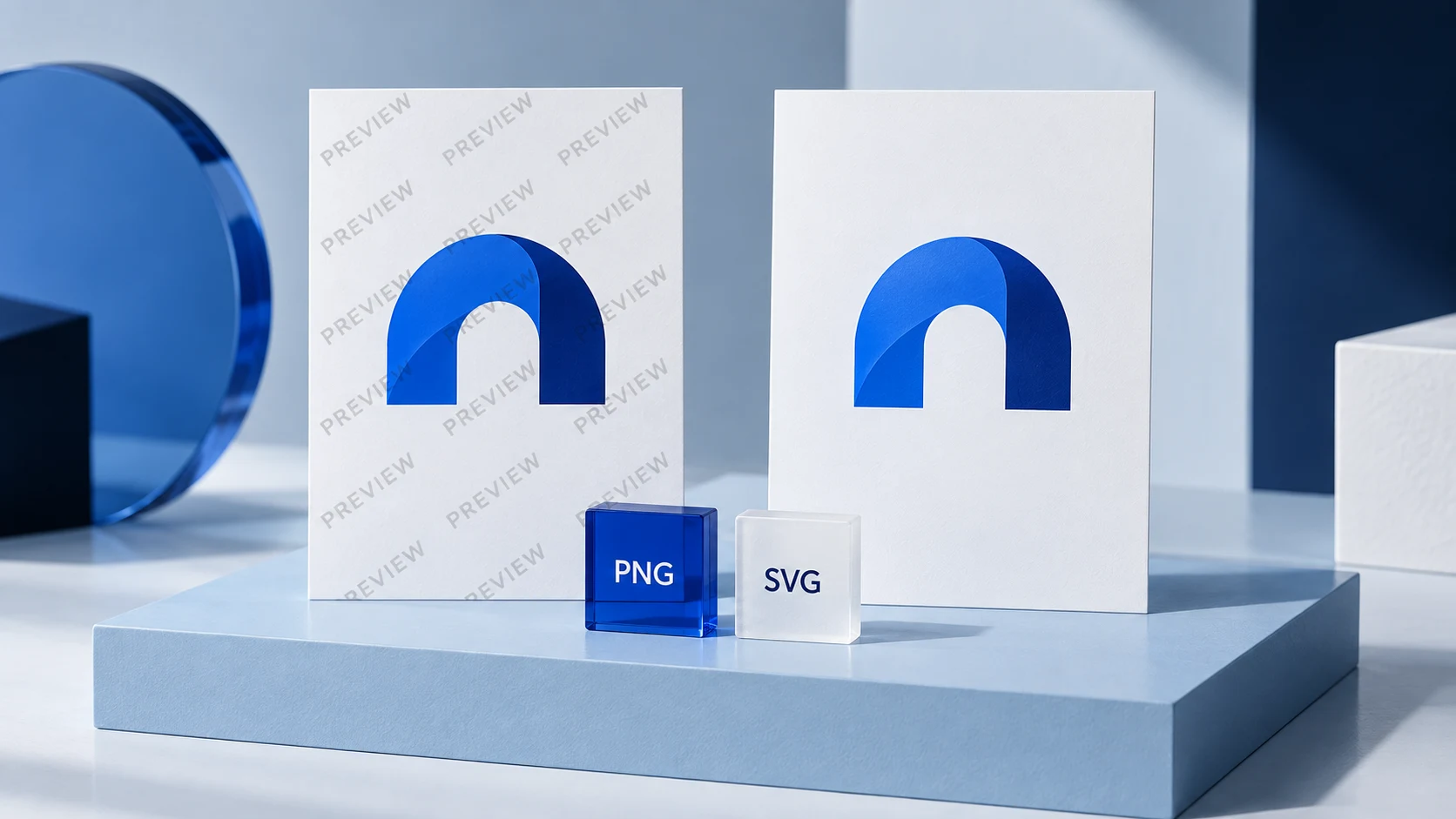
Based on your business name, industry, and preferences, AI may help produce logo concepts and coordinated visual choices. That can include a color palette, typography suggestions, layouts, and previews that show how a direction may look in common business settings. Some platforms also provide downloadable assets for uses such as social media, stationery, email signatures, and business cards.
This is more useful than receiving a logo by itself. A logo is one part of a visual identity. Without agreed colors, type styles, spacing, and versions for different formats, many businesses end up with inconsistent materials within a few weeks of launching.
AI is particularly suitable when you already have a clear idea of your business name, audience, and general personality. A bookkeeping service may need to feel organized and calm. A handmade candle shop may want a warmer, more tactile direction. A consultant may prefer a restrained identity that reads clearly on a proposal document and LinkedIn profile. Those are useful inputs for a tool, but they still require human judgment.
Can AI generate business branding that feels distinct?
It can create a strong starting point, but distinctiveness depends on the quality of the brief and the choices you make after generation. If you give vague prompts such as “modern” or “professional,” the results may be visually usable but broad. Those terms describe thousands of businesses.
A more useful brief identifies what you do, who you serve, and the impression you want to avoid as well as the one you want to create. For example, a local pet grooming business might ask for something friendly and clean without looking overly childish. An online financial coach might want approachable clarity without the visual language of a traditional bank.
Review concepts with real use cases in mind. Ask whether the logo remains recognizable at a small profile-image size, whether the type is readable on a mobile screen, and whether the colors work on both light and dark backgrounds. A polished preview can be helpful, but it is not the same as checking the identity where customers will actually encounter it.
AI also has limits around originality. It can combine common visual patterns effectively, but it does not replace a designer’s research, conceptual development, or bespoke illustration. If your business needs an identity built around a unique story, a proprietary visual language, or a highly specific cultural reference, a skilled designer may be the better fit.
What AI branding does not do
Visual branding supports recognition and consistency. It does not decide what your business should sell, how you should price it, what marketing channel will perform best, or why customers should choose you. Those are business and marketing decisions that should guide the visual work, not be replaced by it.
It also does not provide legal clearance. Before committing to a business name or logo, consider checking name availability and obtaining appropriate professional guidance for your situation. A generated design should not be treated as confirmation that no similar mark, name, or design exists.
There is another practical limitation: generated files are only useful if they match your needs. Before selecting a branding option, confirm which downloadable assets and formats are included for the product you are considering. A web profile image, a print-ready card, and a transparent logo for a website each have different requirements.
A practical workflow for AI-assisted branding
The fastest path is not to generate dozens of random concepts. Start by writing a short decision brief. It does not need agency-style terminology. In a few sentences, define your offer, ideal customer, three words you want the brand to suggest, and two visual directions you do not want.
Next, choose one design direction rather than mixing your favorite parts of several unrelated concepts. A consistent identity usually comes from repeated choices. If your logo is clean and minimal, but your social posts use decorative fonts and unrelated colors, the business can still appear unfinished.
Then test the direction in the places you will use it first. For many small businesses, that means a website header, social profile, email signature, sales document, and one printed item. A restaurant, retailer, or product-based business may also need to consider menus, labels, packaging, or signage. The priority depends on how customers buy from you.
Finally, document the decisions. Save your primary logo, alternate logo versions, approved colors, font choices, and simple rules for spacing and backgrounds in one place. Brand guidelines do not need to be long to be helpful. Even a short reference reduces the chance that a future contractor, team member, or printer introduces a different look.
Ficonica is one option for entrepreneurs who want to move from a business name and industry description toward a coordinated visual identity, including logo concepts, customization, brand previews, guidelines, and selected downloadable assets. It may be a practical fit for a straightforward launch or refresh, particularly when speed and consistency matter. The available assets should still be checked against your specific digital and print needs.
AI branding platform, freelance designer, or agency?
The right choice depends on the scope of the project, the decisions you have already made, and the level of customization required.
An AI-assisted platform is generally suitable for early-stage businesses that need a usable visual system quickly, have a limited budget, and can make basic creative choices themselves. It can also help a founder understand what elements belong in a brand kit before commissioning more specialized work.
A freelance designer may be a better option when you want direct collaboration and original creative refinement, but do not need extensive market research or a large rollout. The experience and deliverables vary by designer, so a clear brief and discussion of files, revisions, and intended uses are worthwhile.
An agency is often more appropriate for a complex rebrand, multiple product lines, detailed customer research, packaging systems, environmental design, or a brand that must coordinate across many teams and channels. That level of work can involve positioning, messaging, naming, and implementation planning alongside design. It takes more time because the problem is larger.
None of these routes is automatically right. A solo consultant preparing a simple website has different needs from a retailer introducing products in several physical locations. Choose the process that matches the consequences of getting the work wrong, not just the appeal of the first logo you see.
How to get better results from generated brand assets
Treat the first output as a decision point, not a final answer. Remove anything that does not support your intended impression, even if it looks attractive on its own. A brand becomes more credible through repetition and clarity, not through adding every available effect or variation.
Keep your primary color palette focused. Use the selected fonts consistently in customer-facing materials. Create a simple folder structure for logos and exports so the correct version is easy to find. These small operational habits matter because branding is experienced over time, across many touchpoints.
AI can give a new business a practical visual foundation. The part no tool can automate is deciding what you want customers to understand about your business each time they see it. Start there, then choose and apply a visual system with enough discipline to make that idea recognizable.