If you are searching for the best ai logo maker 2026, the right choice is usually the tool that gives you a usable logo system quickly, lets you customize it without design skills, and provides the files and brand assets your business actually needs. For most startups, freelancers, creators, and small businesses, that matters more than flashy effects or endless logo variations.
A logo maker is not just picking an icon and typing your business name. What you really need is a visual identity that stays consistent across your website, social media, email signature, business cards, and basic print materials. That is where some AI tools help, and where others stop too early.
What makes the best AI logo maker in 2026?
The short answer is usability, customization, and complete outputs.
Many AI logo makers can generate a decent starting concept in minutes. That part is no longer rare. The real difference shows up after the first result. Can you adjust the typography without breaking the design? Can you test different color directions? Do you receive more than one file type? Can you build a simple brand look around the logo, or are you left to figure out fonts, colors, and usage on your own?
For a new business, the best option is generally the one that reduces follow-up work. A pretty logo preview is not enough if you still need to assemble a color palette, choose fonts, create social assets, and prepare files for web and print.
Best AI logo maker 2026 criteria that actually matter
If you compare tools based on what helps a business launch faster, a few criteria matter more than the rest.
1. Quality of the starting concepts
A good AI logo maker should generate concepts that feel relevant to your business name and category, not random symbols attached to generic text. That does not mean every result will be original or perfect. It means the first round should give you a direction worth refining.
If every option looks interchangeable with thousands of other businesses, the tool may still be fine for rough exploration, but not for a brand you plan to use seriously.
2. Real customization, not cosmetic tweaks
Some platforms let you swap colors and icons, but little else. Others give you meaningful control over layout, font pairing, spacing, symbol position, and brand style.
That matters because the first AI output is rarely the final answer. The best tools support practical adjustment without forcing you into professional design software. If a platform limits edits too much, you may end up paying twice - once for the tool and again for a designer to fix the result.
3. A brand system, not just a logo
This is where many buyers make the wrong comparison. They search for a logo, but what they actually need is consistency.
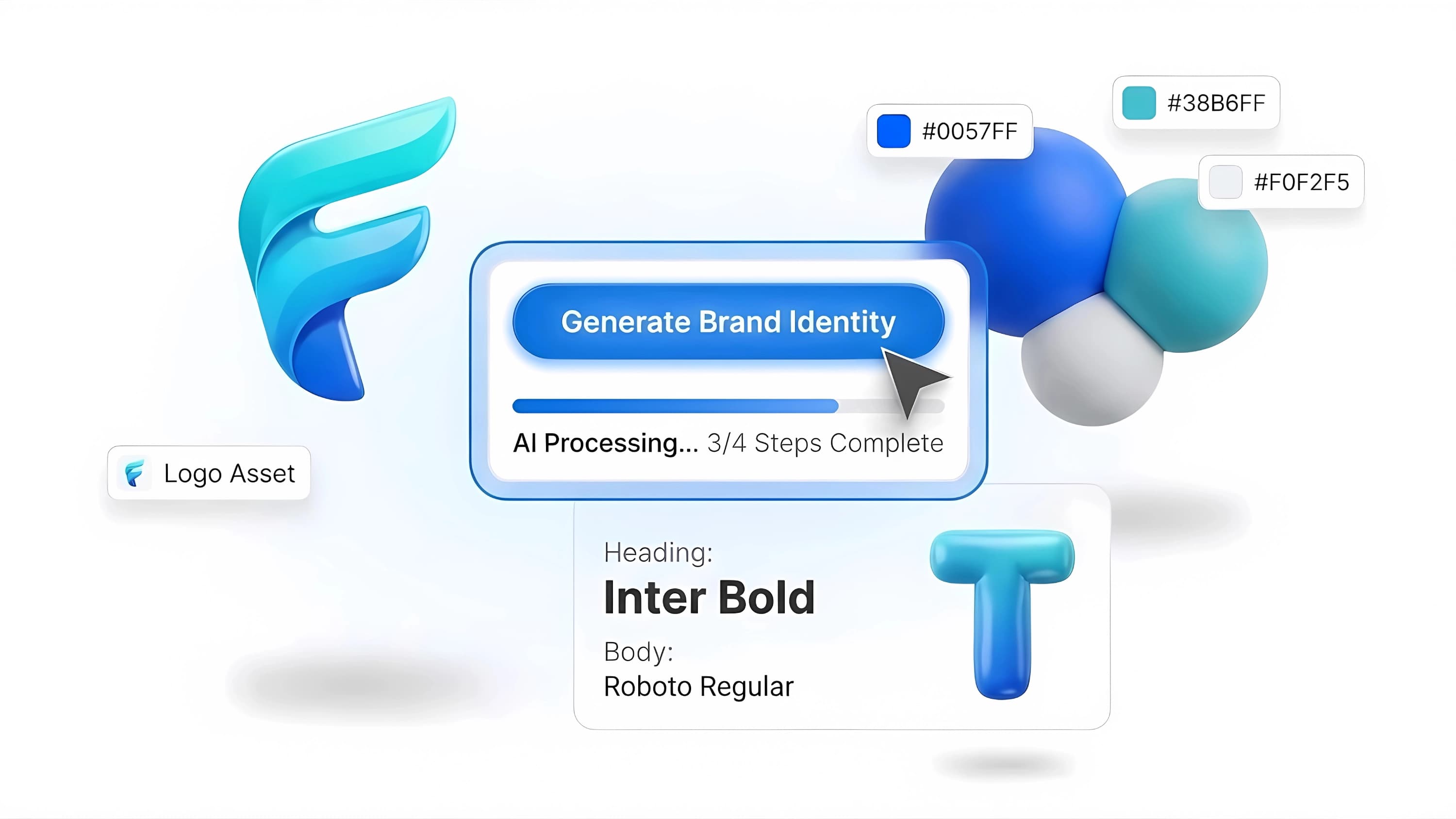
A small business usually needs a primary logo, alternate logo versions, color guidance, font pairings, and assets that work across common touchpoints. If the platform helps you move from a single mark to a coordinated brand kit, it is generally more useful than one that stops at logo generation.
4. File readiness for real use
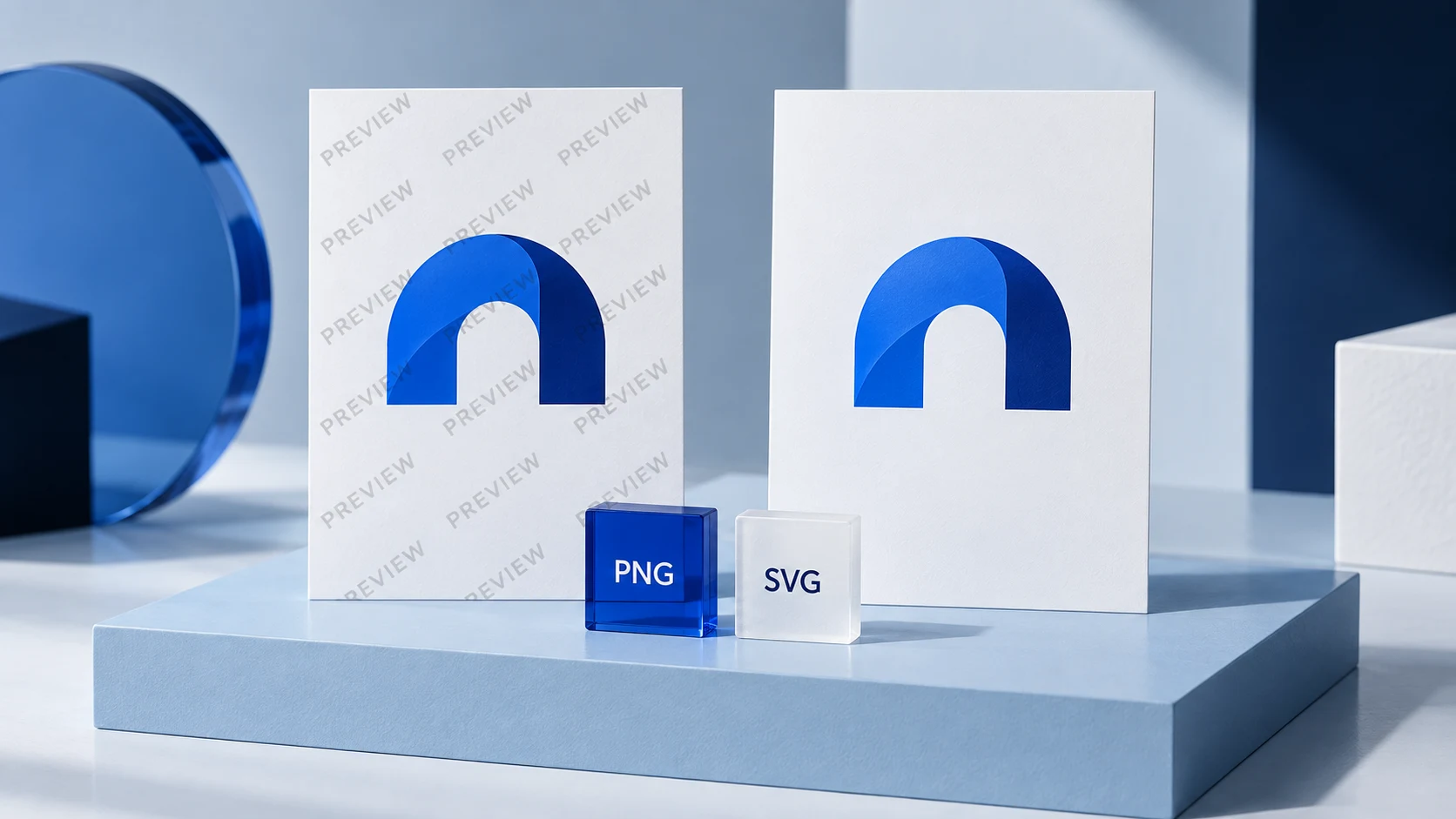
Before choosing any AI tool, check whether it helps you get assets suitable for digital and print use. Businesses often discover too late that their logo looks fine on a website header but falls apart on a social profile, printed card, or presentation slide.
You do not need every possible file under the sun. You do need assets prepared for the places your business will actually show up.
5. Speed without confusion
Fast matters, especially for founders juggling naming, offers, sales pages, and setup tasks. But speed is only useful when the workflow is clear.
A strong AI branding tool should help a non-designer move from business name to usable visuals without making every step feel technical. If the interface creates hesitation, it defeats one of AI’s main advantages.
When an AI logo maker is a smart choice
An AI logo maker is generally suitable when you need a professional-looking identity fast, your budget is limited, and your branding needs are straightforward.
That includes many consultants, online stores, creators, service businesses, solo founders, and early-stage startups. If your goal is to launch with a clean, coordinated look and improve later as the business grows, AI can be a practical first step.
It may also help when your current branding is inconsistent rather than completely wrong. In that case, a structured AI platform can give you a cleaner logo direction plus matching colors, fonts, and supporting materials without the time and cost of a full agency process.
When AI is probably not enough
This depends on the complexity of your brand.
If you need deep market positioning, custom illustration, packaging systems, extensive brand research, or a highly original visual language, an AI logo maker may not be the best fit. The same is true if multiple stakeholders need to align around a brand strategy, or if your business operates in a crowded category where distinctiveness is central to the brand decision.
In those situations, a freelance designer or agency may be more appropriate. The extra cost can make sense when the project requires interpretation, creative direction, and strategic judgment beyond visual assembly.
That does not make AI bad. It simply means branding needs exist on a spectrum. Some businesses need efficiency. Others need depth.
AI logo maker vs designer in 2026
This comparison is often framed too dramatically. In practice, it comes down to scope.
An AI logo maker is best viewed as a fast branding workflow for businesses that need a usable identity system without a traditional design engagement. A designer is generally a better choice when the brand needs custom thinking, multiple rounds of refinement, or a more tailored creative outcome.
If you are still unsure, ask a simple question: do you need help making branding assets, or do you need help defining what your brand should communicate in the first place?
If the answer is mostly assets, AI may work well. If the answer is strategy, differentiation, and creative interpretation, consider hiring a human expert.
One practical way to evaluate tools
Instead of asking which platform is universally the best ai logo maker 2026, compare tools using your actual launch checklist.
Start with your business name and a short description of what you sell. Then look at how well the tool handles the next five steps: generating logo concepts, refining a preferred direction, building supporting colors and fonts, previewing the brand in realistic uses, and preparing assets you can download and apply.
This is also the point where a platform like Ficonica may be worth considering. It is designed around practical visual identity creation, which is often more helpful for small businesses than a logo-only workflow. That said, it still depends on your needs. If you want a broader strategic process or heavily custom design, another route may suit you better.
Common mistakes when choosing an AI branding tool
The biggest mistake is judging the tool by the first logo image alone. A strong preview can hide weak customization, missing outputs, or limited brand support.
Another mistake is expecting the tool to solve business strategy. Visual branding can improve consistency and presentation, but it does not replace positioning, messaging, pricing, or customer research.
A third mistake is ignoring limitations. AI can accelerate design decisions, but it does not remove the need for human review. You still need to check whether the result fits your audience, reads clearly at small sizes, and feels appropriate for your category.
What a small business should look for right now
If you want a practical answer, look for a platform that helps you create a logo and a coordinated visual identity in one workflow. Make sure it supports customization, gives you usable brand outputs, and fits the level of originality your business truly needs.
Do not overbuy if you are just trying to launch. But do not underbuy by choosing a tool that gives you only a logo image and leaves the rest unresolved.
The best choice is usually not the one with the most dramatic marketing. It is the one that helps you look consistent, credible, and ready to use your brand across real business touchpoints.
If you are deciding this week, treat your logo as the start of a system, not a standalone graphic. That mindset usually leads to a better choice than chasing the tool with the most eye-catching demo.