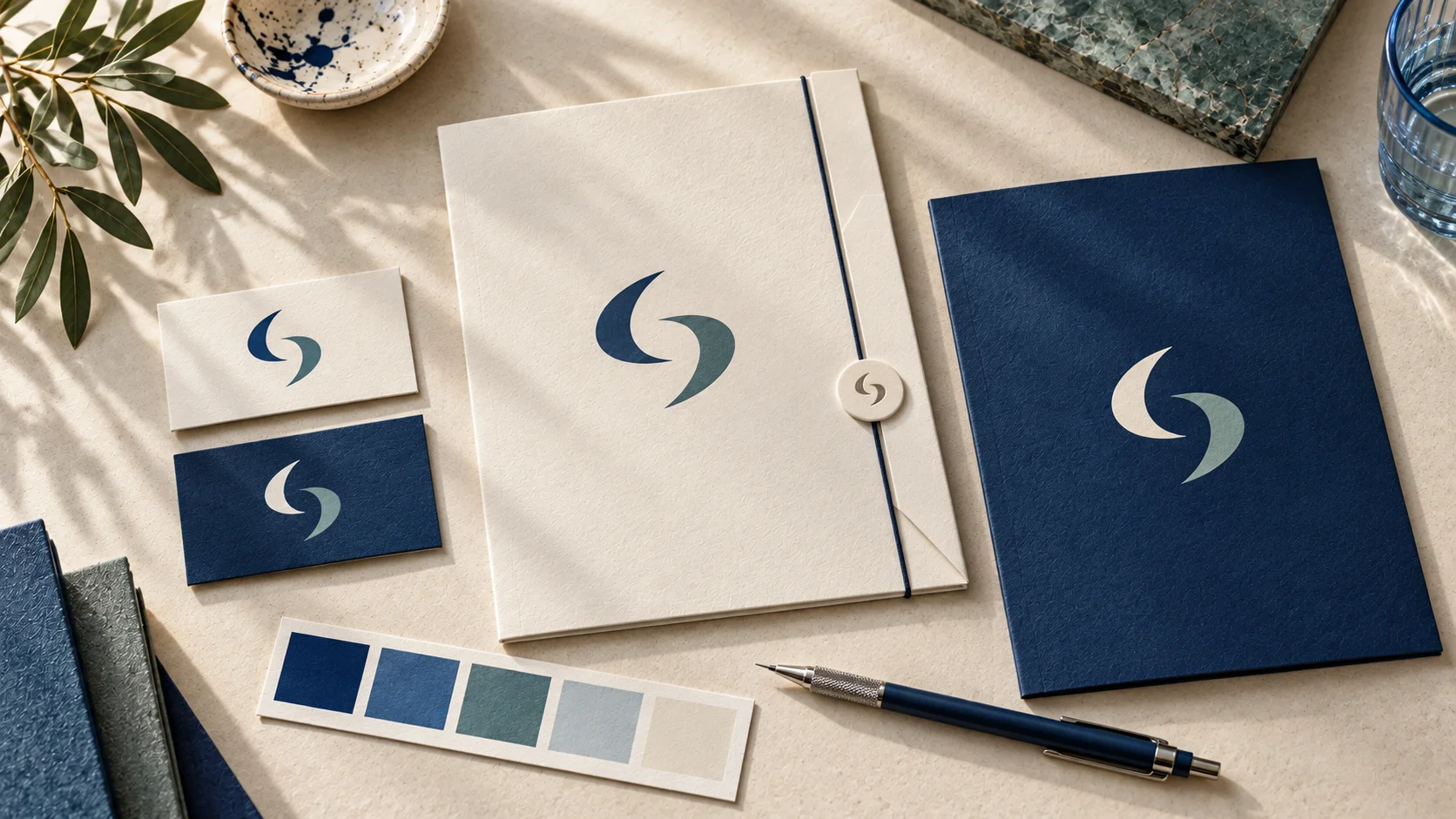
A logo package for entrepreneurs should give you more than one attractive logo file. It should provide the practical pieces needed to show up consistently on a website, social profile, invoice, presentation, email signature, and printed material without rebuilding your design each time.
That does not mean every new business needs a large agency-style brand system. A solo consultant launching a service business has different needs from a product company preparing labels and packaging. The useful question is not, “What is the biggest package available?” It is, “What will I need to use in the next six to twelve months?”
What a logo package is meant to solve
A logo package is a set of logo variations and supporting visual assets designed to work across different spaces. Your main logo may look right in a website header, but it can become unreadable in a square social profile image or too wide for a business card. A package addresses those everyday constraints before they become a last-minute design problem.
For an entrepreneur, the value is usually speed and consistency. Instead of choosing a new shade of blue for every post or recreating your logo in a document, you have a defined visual starting point. This supports recognizable presentation, but it is not the same as a marketing plan, a business strategy, or a guarantee of customer response.
A well-scoped package also helps clarify what you are buying. Some offers focus only on a logo mark. Others include colors, typography, templates, and brand guidance. Neither approach is automatically right. The better fit depends on how many places your business needs to appear and how much design support you have internally.
The essential parts of a logo package for entrepreneurs
Primary logo and usable variations
Start with a primary logo: the version you will use most often on your website, proposals, and major brand touchpoints. It should be accompanied by a few practical variations, not a dozen nearly identical options.
A horizontal version is often useful for website navigation and letterheads. A stacked version can work better in narrow spaces. A logo icon, monogram, or simplified symbol may be helpful for profile images, browser icons, and small applications. If the business name is long, these alternate layouts matter even more.
You will also generally need light and dark versions. A dark logo can disappear on a dark photo or colored background; a light version may be needed for the same placement. Ask whether the package includes these basic color adaptations rather than assuming the primary logo will work everywhere.
File formats for digital and print use
File formats are where many otherwise good logo packages fall short. You should receive files suited to both screen-based use and professional printing.
Vector files, commonly SVG, EPS, or PDF, can be scaled without becoming blurry. They are useful for printers, signage providers, merchandise suppliers, and any large-format application. Raster files, such as PNG and JPG, are made from pixels and are more common for websites, documents, and social media.
A transparent PNG is especially practical because it can sit on different backgrounds without a white box around it. JPG files are useful for certain digital placements, although they usually do not support transparent backgrounds. You may not personally open every file type, but having the appropriate formats available prevents delays when a vendor asks for one.
Before choosing a package, check the actual deliverables. “High-resolution” describes quality, not necessarily file type. If print is part of your plan, confirm that usable vector artwork is included.
A color palette with clear specifications
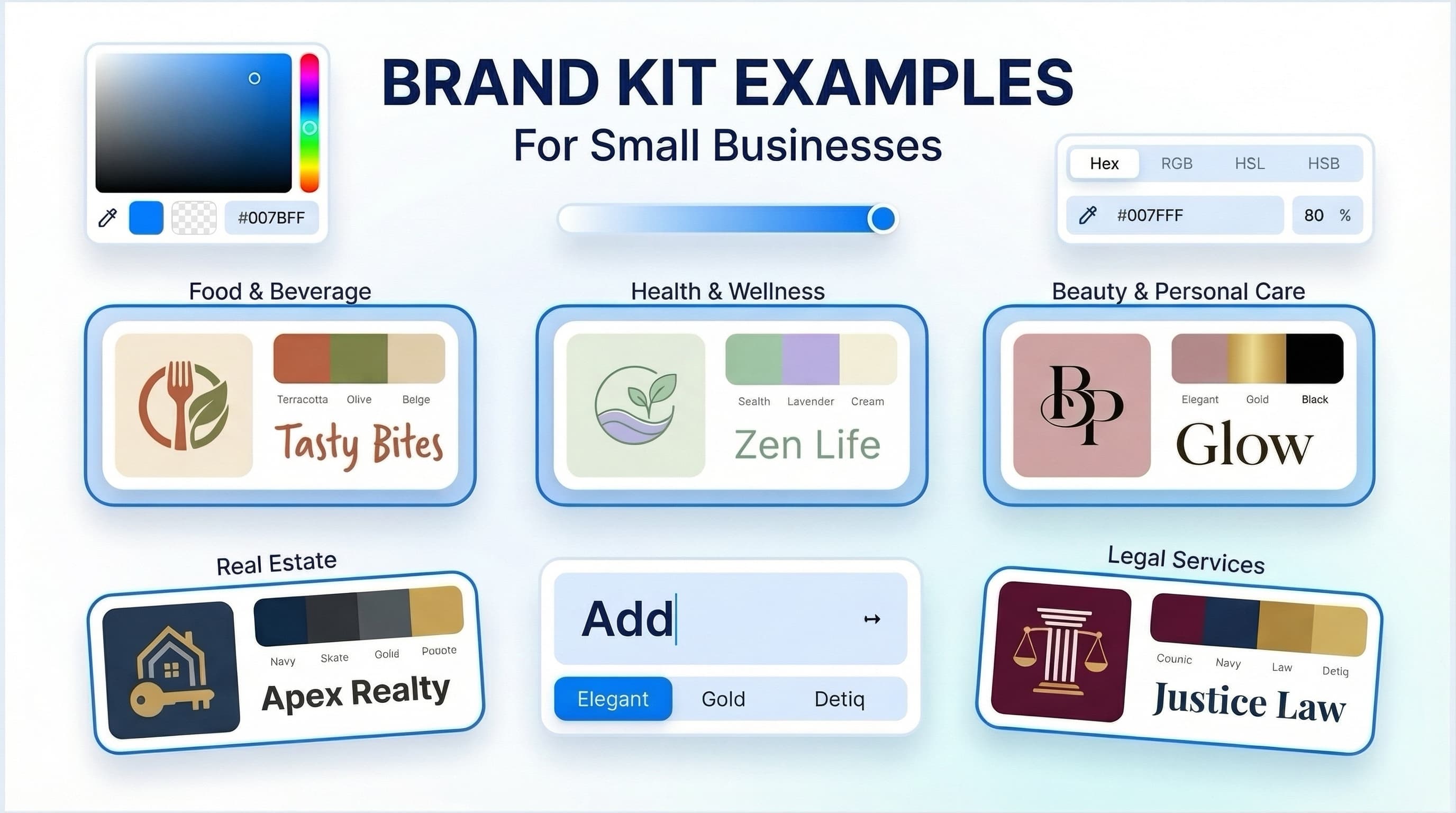
A brand palette should include more than a single logo color. At minimum, it should identify primary colors and a small set of supporting colors that can be used for backgrounds, buttons, headings, accents, or printed materials.
The useful part is the specification. Digital colors are commonly documented with HEX values, while RGB values support screen applications. Print projects often use CMYK values. A designer or print vendor may also work with Pantone colors for particular production needs, but that level of specification is not necessary for every early-stage business.
Keep the palette manageable. Too many colors can make decisions harder, particularly when different people create content. A limited set with an intended role for each color is generally easier to apply than a broad collection of attractive swatches.
Font pairings and basic type rules
Typography shapes how your business sounds visually. A font pairing typically includes a display or heading font and a body font that is easy to read in longer text. The goal is not to find the most unusual typeface. It is to create a repeatable system that remains legible on a phone, in a proposal, and in a social graphic.
Your package should state the font names and explain where to use them. For example, one font might be designated for headings and another for paragraph text. If a specific font requires a separate license, make sure you understand what you need to obtain before using it in your website, documents, or advertising. Licensing and legal rights depend on the font provider and the terms involved.
For many entrepreneurs, accessible web and office-friendly alternatives are also worth considering. A beautiful font that your team cannot use in everyday tools may create inconsistency rather than solve it.
Supporting assets that may be worth adding
The right additions depend on your operating model. A local service provider may get immediate value from a business card, estimate template, and email signature. An online creator may prioritize social profile graphics, post templates, and presentation visuals. A product brand may need more specialized packaging and label work than a standard logo package provides.
Consider adding supporting assets when they will be used repeatedly. Four commonly useful options are:
- Social media profile and cover graphics sized for your active channels.
- A business card or simple stationery layout for in-person interactions.
- An email signature that carries your logo, colors, and contact details cleanly.
- Presentation, proposal, or document templates for client-facing work.
Templates are helpful only when they are easy to edit and match the tools you actually use. A polished design that requires software you do not have can become shelfware. Ask what is editable, what is delivered as a final file, and whether you will need outside help to update details later.
Brand guidelines make the package easier to use
A compact brand guide can be one of the most practical deliverables in a logo package. It does not need to be a lengthy corporate manual. For a new business, a concise guide can document your approved logo versions, minimum clear space, color codes, font choices, and a few examples of correct and incorrect use.
This becomes valuable when you work with a web developer, virtual assistant, printer, freelancer, or future employee. Rather than explaining your preferences from scratch, you can share a single reference. It also helps prevent small visual changes from accumulating until your business looks unrelated across channels.
AI-assisted branding platforms can be a practical option when you need coordinated basics quickly and are comfortable making decisions within a guided system. For example, Ficonica helps users create logo concepts, customize them, build color and font combinations, preview the identity, and access brand guidelines and downloadable assets depending on the selected product.
That approach is generally suitable for founders who need a clear starting system without beginning with a traditional agency engagement. It may be less suitable when the project requires deep customer research, an original illustration style, a complicated packaging family, or extensive creative direction across many touchpoints. In those cases, a designer or agency may provide the more appropriate level of collaboration.
How to choose the right scope before you buy
Begin with a short inventory of where your brand will appear soon. Include your website, social channels, email, documents, sales materials, online marketplace, signage, and any planned print items. Then identify which of those you will personally create and which will be handled by a vendor.
A freelancer or startup founder who works entirely online may only need core logo versions, web-ready files, colors, fonts, and a social profile image. A business opening a physical location may need print-ready artwork, signage considerations, business cards, and more careful coordination with local production vendors. The package itself does not have to include every future item, but its foundation should be flexible enough to support them.
Also separate design needs from legal and strategic questions. A logo package can help define the appearance of your business, but it does not establish trademark availability, register a mark, validate a business name, or determine market positioning. Those are separate decisions that may require appropriate professional guidance.
A practical standard for your first package
For most early-stage businesses, a sensible first package includes a primary logo, a few functional variations, light and dark versions, digital and vector file formats, a defined color palette, font guidance, and a simple brand guide. Add templates or stationery when you know they will be used immediately.
Avoid paying for an oversized asset library just because it sounds comprehensive. At the same time, do not choose a logo-only file if you already know you need a website, sales documents, and social channels next month. The strongest choice is the one that makes your next visible business task easier - and gives you a consistent system to build from as the business becomes more defined.