If you are asking what is brand creation, the short answer is this: brand creation is the process of building the identity people recognize and remember when they encounter your business. For most small businesses, that includes your name, logo, colors, typography, visual style, and the rules that keep those pieces consistent across your website, social profiles, email, and printed materials.
That answer matters because many business owners use the word brand to mean everything at once. Sometimes they mean marketing. Sometimes they mean a logo. Sometimes they mean reputation. Those things are connected, but they are not the same. Brand creation usually starts with defining how your business should look and present itself, then turning that into assets you can actually use.
What brand creation actually includes
At a practical level, brand creation is about making a business look coherent. If a customer sees your Instagram post, visits your website, opens your proposal, and receives your invoice, those touchpoints should feel like they come from the same company.
That usually involves a few core parts. First is your brand name, if you have not finalized one yet. Second is your logo system, which may include a primary logo, a simplified version, and a symbol or icon. Third is your color palette and font pairing. Fourth is the set of supporting materials that carry your identity into daily use, such as social graphics, email signatures, business cards, or letterheads. Finally, there are basic brand guidelines so you do not have to guess which version to use each time.
For a startup or solo business, this does not need to become a huge strategy project. In many cases, the goal is simpler: create a visual identity that looks credible, works across common formats, and stays consistent as the business starts growing.
What is brand creation not?
This is where confusion usually starts. Brand creation is not the same as running ads, writing sales copy, improving SEO, or building a full business strategy. A polished visual identity may help your business appear more professional, but it does not automatically improve marketing performance.
It is also not the same as legal protection. Creating a brand name or logo is different from checking availability, registering trademarks, or handling ownership questions. Those are separate legal steps and may require professional advice.
It is also worth separating brand creation from reputation. Your brand identity shapes first impressions. Your actual reputation comes from what customers experience after they buy, contact support, read reviews, or use your product. Good design can support trust, but it cannot replace operational quality.
Why brand creation matters early
New businesses often delay branding because it feels secondary to launching the offer. That instinct is understandable. If you are still validating a service or building a product, spending heavily on design may not make sense yet.
But some level of brand creation is usually worth doing early because inconsistency creates friction. A business with three different logos, random fonts, and mismatched colors can look unfinished even when the service is solid. That does not mean you need a complex identity system on day one. It means you need enough structure to present yourself clearly.
For a freelancer, that may be a clean wordmark, two fonts, a simple palette, and a few polished templates. For an ecommerce brand, it may include product presentation graphics and packaging direction. For a startup pitching investors or clients, it may mean a logo set, presentation styling, social profile assets, and a lightweight brand guide.
The right scope depends on where and how the brand will be used.
What is brand creation in practice?
In practice, brand creation is less about abstract design theory and more about decisions. You decide how formal or casual the business should feel. You decide whether the visual direction should look minimal, bold, classic, technical, playful, or premium. Then those choices get translated into actual components.
A logo is one part of that, but not the whole thing. A logo on its own often fails because it has no system around it. If the colors shift every week and the typography changes every time you make a document, the logo cannot carry the brand by itself.
This is why a complete brand kit is often more useful than a standalone logo file. A kit gives you repeatable pieces you can apply across channels. That repeatability is what makes a brand feel real.
A simple brand creation process
For most small businesses, the process starts with clarity, not software. Before choosing visuals, define the basics: what you sell, who it is for, what tone fits your audience, and where the brand will appear first. A local service business, a personal consulting brand, and an online shop may all need different visual priorities.
Next comes visual direction. This is where logo concepts, color palettes, and font pairings begin to take shape. The strongest options are usually the ones that match the business context rather than chasing trends. A trendy logo can age quickly. A clear and usable one generally lasts longer.
After that, the identity needs to be tested in real situations. Does the logo still work in a small social profile image? Do the colors remain readable on a website? Do the fonts feel usable in presentations, email headers, or printed materials? Brand creation is not finished when something looks good in isolation. It needs to work where the business actually operates.
The last step is organizing assets and rules. That means saving the right logo versions, keeping colors and fonts documented, and making sure future posts, documents, and designs stay aligned.
AI tools, designers, and agencies
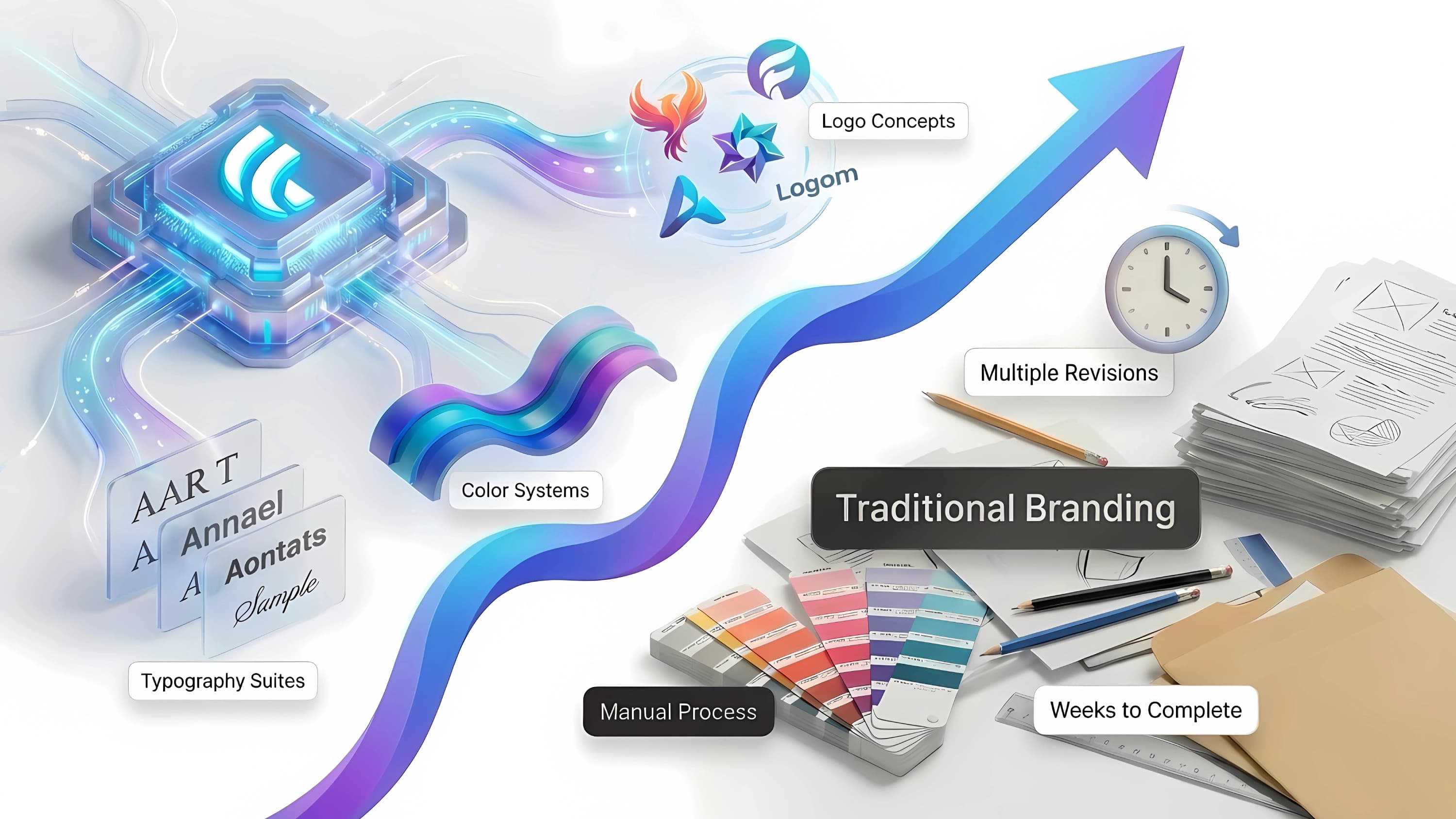
If you are trying to create a brand quickly, there are now several ways to do it. An AI-assisted branding platform may be suitable when you need a coordinated visual identity without starting with a traditional agency process. This can be a practical route for entrepreneurs, creators, and small teams that need speed, flexibility, and usable assets more than highly custom strategy work.
For example, a platform like Ficonica is built around that early-stage need: moving from a business name and industry description to logo concepts, color and font direction, brand previews, guidelines, and downloadable assets for digital and print use.
That said, AI-assisted branding is not automatically the right fit for everyone. If your business needs deep market research, packaging systems, original illustration, highly distinctive art direction, or a complex brand architecture, a designer or agency may be the better choice. The trade-off is usually between speed and customization, not good versus bad.
A freelancer can sit somewhere in the middle. That may work well if you want more collaboration than a software-driven process but do not need a full agency engagement.
Common mistakes during brand creation
One common mistake is treating the logo as the entire project. Another is choosing visuals based only on personal taste. You may love a certain font or color, but if it makes your business hard to read or inconsistent across channels, it may not be the right choice.
Another issue is building a brand without thinking about file use. Many small businesses end up with one logo image that works on a website but fails in print, on dark backgrounds, or inside social profile circles. A useful brand system needs variations and organized files, not just a single exported image.
It is also easy to overbuild too early. Some businesses need a basic, clean identity now and a more custom system later. That is a valid approach. Brand creation does not have to happen all at once.
How to know when your brand is good enough
A small business brand is generally good enough when it meets three tests. It looks consistent across your main touchpoints. It feels appropriate for your audience and offer. And it gives you practical assets you can keep using without redesigning everything every month.
That standard may sound modest, but it is realistic. You do not need a giant brand book to launch a credible business. You need a system that helps customers recognize you and helps you present the business clearly.
If your current materials feel disconnected, if you avoid sending people to your website because it looks unfinished, or if every new document requires design guesswork, your brand creation process probably needs more structure.
Brand creation is not about making a business look fancy. It is about giving your business a consistent visual identity that is ready to be used. The more practical your choices are, the easier it becomes to show up clearly wherever people find you next.