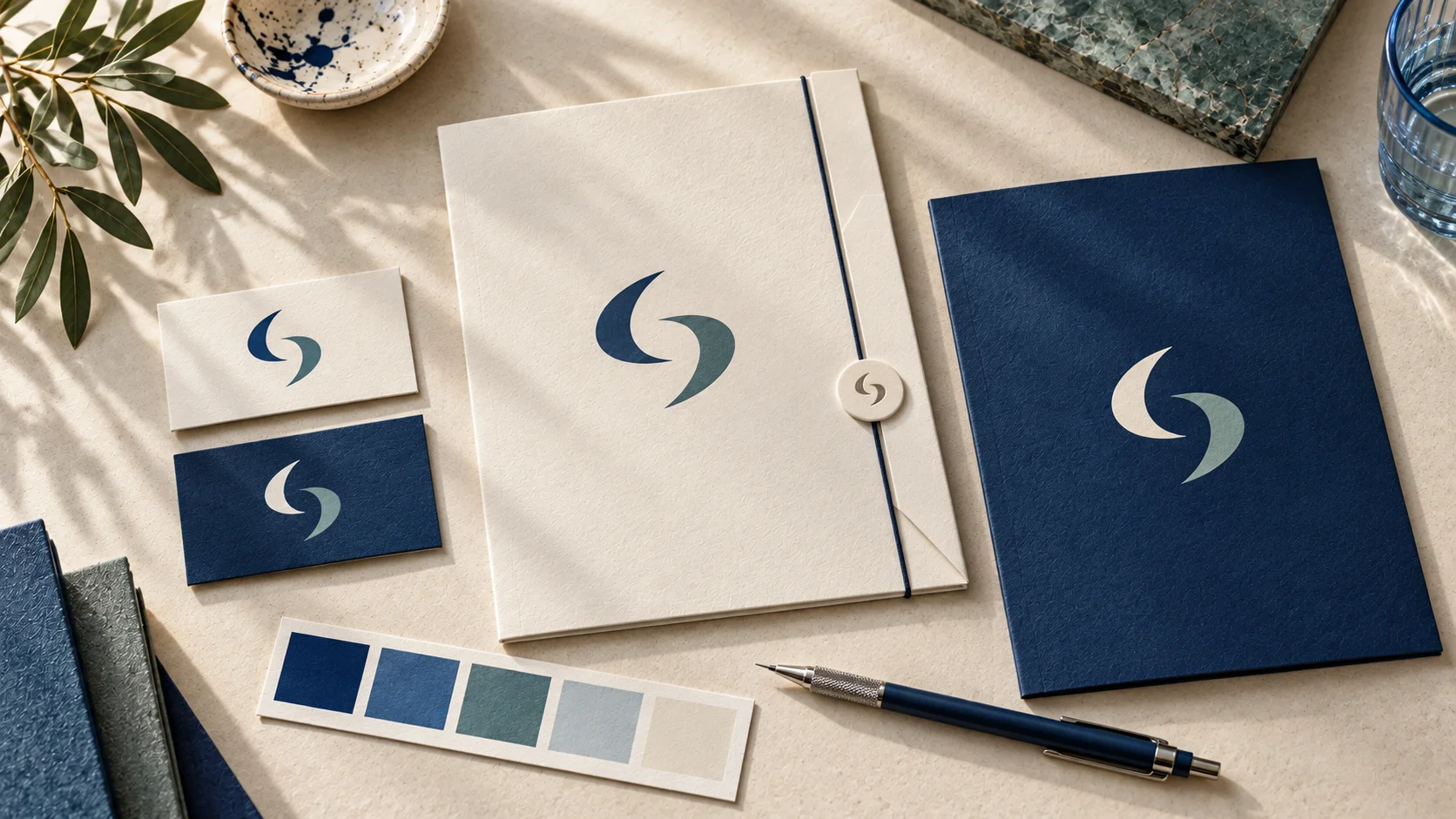
A logo kit is the collection of files and basic brand assets you need to use your logo correctly across real business touchpoints. For most small businesses, that means more than one logo file. It usually includes logo variations, web and print file types, color references, font details, and a few ready-to-use assets for places like social media, email, and stationery.
If you only have one logo image, you do not really have a workable system yet. You have a starting point. A useful logo kit turns that single mark into something you can apply consistently without redesigning it every time you need a profile picture, website header, invoice, or printed card.
What a logo kit usually includes
The exact contents depend on who created it and how much branding work was done, but a practical logo kit usually covers the basics needed for everyday use. The core piece is your main logo, often paired with alternate layouts such as a horizontal version, a stacked version, and a simple icon or symbol if one exists.
File types matter just as much as the design itself. A business typically needs raster files for quick digital use and vector files for scaling and print. PNG files are commonly used when you need a transparent background, such as on websites, presentations, or social graphics. JPG files can be fine for simple previews, but they are less flexible because they usually do not support transparency. Vector formats are important for larger or professional production uses because they can scale without losing quality.
A complete logo kit may also include black, white, and full-color versions. That sounds minor until your logo needs to sit on a dark background, a low-ink printout, or a social template with limited space. One version rarely works everywhere.
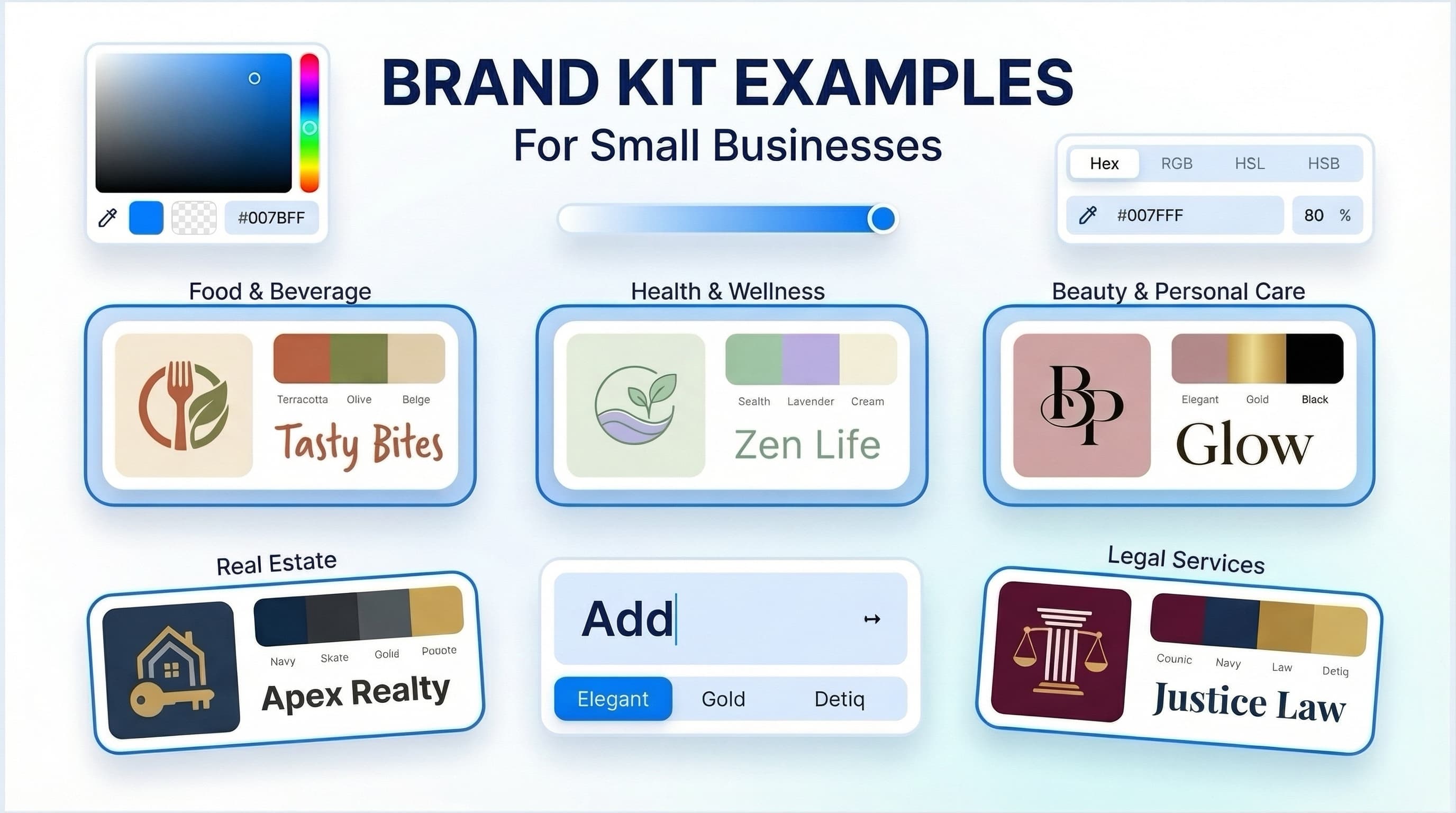
Beyond the logo files, many businesses also need a simple brand reference. This often includes the brand color palette, font pairings, spacing guidance, and basic usage notes. Even a short brand guide can prevent the most common consistency problems, like stretching the logo, changing the colors, or using random substitute fonts.
Why a logo kit matters more than a single logo file
A lot of first-time founders focus on the logo itself and ignore the handoff. That is where many branding problems start. The issue is not that the logo looks bad. The issue is that nobody knows which version to use, what colors are correct, or whether the file will print clearly on a sign, package insert, or banner.
A logo kit helps reduce that friction. It gives you the assets needed for routine execution, which is what actually affects consistency. If your website uses one blue, your business card uses another, and your Instagram graphics use a third, the brand starts to feel improvised even if the logo design is decent.
This is also where expectations matter. A logo kit supports visual consistency. It does not replace business strategy, messaging, trademark review, or marketing execution. It helps your brand look coordinated. Whether that identity connects with the right audience depends on broader decisions beyond the files themselves.
The minimum logo kit for a small business
If you are launching quickly and want to avoid overcomplicating things, start with the minimum set that covers most use cases. That usually means a primary logo, a secondary variation, a simple icon if available, full-color and one-color versions, transparent PNGs, at least one vector format, your brand color codes, and your chosen fonts.
That small set is generally enough for a website, social profiles, email signature, slide deck, simple print items, and basic promotional graphics. You may not need a long brand manual on day one. You do need enough structure so your identity does not change every time a new asset gets created.
For example, a solo consultant may need only a website header logo, social profile mark, presentation cover, invoice header, and email signature setup. A product-based business may need more flexibility earlier because packaging, inserts, labels, and marketplace images often create more layout constraints.
What to check before you accept a logo kit
The first question is practical: can you use these files everywhere you actually operate? Many people discover too late that they received a logo in only one format or one orientation. That creates unnecessary redesign work.
Check whether the kit includes multiple sizes and versions for light and dark backgrounds. Confirm that your colors are listed in usable values, not just shown visually. Make sure the font names are identified correctly so you or a collaborator can apply them later.
It is also worth checking whether the logo still works when it gets small. A detailed mark may look fine on a desktop preview and then collapse into visual noise as a social avatar or favicon. In that case, the logo kit should include a simplified version or icon, not just the full logo scaled down.
Another useful test is to imagine five real uses right now: website header, Instagram profile, email signature, business card, and invoice or proposal. If the kit does not clearly support those uses, it may be incomplete for a working business.
Logo kit vs brand kit
People often use these terms interchangeably, but they are not always the same thing. A logo kit is usually narrower. It focuses on the logo files and the basic rules needed to use them properly.
A brand kit is often broader. It may include the logo kit, but also social media graphics, business cards, letterheads, email signatures, presentation templates, and more detailed visual guidelines. In some cases, it also includes photography direction, icon style, or mockups that show how the identity appears in context.
For a new or very small business, the line between the two may not matter much. You mainly need enough assets to launch without looking inconsistent. But if you are comparing platforms, freelancers, or agencies, the distinction matters because one provider may stop at logo files while another delivers a more complete visual system.
Who needs a basic logo kit and who needs more
A basic logo kit is generally suitable for freelancers, creators, consultants, local service businesses, and early-stage startups that need to get visible quickly. If your immediate goal is to launch a site, set up social profiles, send proposals, and print simple materials, a straightforward package may be enough.
More complex businesses usually need more than a basic logo kit. If you have multiple sub-brands, product lines, packaging requirements, signage systems, retail environments, or a highly differentiated brand strategy, a larger identity system may be more appropriate. The same is true if you need custom illustration, extensive competitor research, or highly original creative direction.
That is where a designer or agency may be the better fit. The trade-off is usually time and budget versus depth and customization. An AI-assisted platform can be a practical option when you need a coordinated visual identity faster and with less complexity, while a custom designer-led process may make more sense when the brand problem is broader than visuals.
How to build a useful logo kit without wasting time
Start with usage, not aesthetics. List the places your logo will appear in the next three months. Most small businesses can predict this pretty easily: website, social profiles, email signature, basic print materials, proposals, and maybe packaging or signage. That list will tell you what file types and logo variations you actually need.
Then build for flexibility. Ask for or generate alternate layouts early instead of waiting until the first problem appears. A wide logo may work well in a website header and fail on a square social profile. A detailed badge may look strong on a sticker and fail in an email footer.
Keep the supporting brand choices simple. One primary color palette and one or two font choices are often enough at the start. Complexity tends to create inconsistency unless you have a trained design team managing the system.
If you are using a platform such as Ficonica, the practical value is not just getting a logo concept quickly. It is moving from an isolated logo to a more usable brand system with coordinated assets and guidance. That said, whether that approach is suitable depends on how customized your brand needs to be and how much strategic input you expect.
The most common mistake
The most common mistake is treating a logo kit like a folder of files instead of a working toolkit. If you never define which logo goes where, which colors are official, and which font pair should be used, the kit will not solve much.
The goal is not to collect assets. The goal is to make everyday brand decisions easier and more consistent. A good logo kit does that quietly, in the background, every time you publish, print, send, or present something.
If your business is still early, do not wait for a perfect identity system before you start using your brand. Build a logo kit that covers your real needs now, keep it organized, and improve it as your business becomes more complex.