If you are asking what is brand identity creation, the short answer is this: it is the process of building the visual system people use to recognize your business. That system usually includes your logo, colors, fonts, image style, and simple rules for using them consistently across your website, social profiles, documents, and printed materials.
For a small business, this matters because most customers do not meet your business through a strategy deck. They meet it through a logo on a website header, an Instagram post, a business card, an invoice, or a product label. If those pieces feel disconnected, the business can look unfinished even when the service is good. Brand identity creation is the work of making those pieces look like they belong together.
What brand identity creation actually includes
A lot of people use branding as a catch-all term, but brand identity creation is more specific than that. It is not your entire marketing plan, and it is not the same thing as business strategy. It also does not cover legal trademark work or guarantee that a name or visual mark is legally available.
What it generally covers is the visual side of the brand. That often starts with a logo, but a logo alone is not a full identity. A usable identity also needs a color palette, font choices, and versions of the logo that work in different spaces. In many cases, it also includes social media graphics, email signatures, business cards, letterheads, and a short brand guide that explains how to use everything.
That is why businesses often run into trouble when they buy only a logo file and stop there. The logo may look fine, but the rest of the brand still has no system. The result is usually inconsistency rather than clarity.
What is brand identity creation in practice?
In practice, brand identity creation is a workflow. You start with basic inputs about the business, then turn those into visual decisions that can be repeated. The goal is not to make every design choice once. The goal is to create a set of choices that stays coherent over time.
For example, a bookkeeping service and a streetwear label may both need a logo, colors, and fonts, but the identity criteria are different. The bookkeeping brand may need to feel clear, dependable, and restrained. The streetwear brand may need stronger contrast, more personality, and more expressive typography. Neither direction is universally right. It depends on the business, the audience, and where the brand will appear most often.
That is also why brand identity creation should be judged by usability, not just taste. A logo that looks impressive in a large mockup but fails at small sizes is a weak business asset. A color palette that looks stylish but creates poor contrast on a website may cause practical problems. Good identity work is not only about looking distinctive. It also needs to function.
The core parts of a brand identity system
Most small businesses need a simple, working system rather than a large brand manual. That system usually has a few essential parts.
The first is the logo set. This often includes a primary logo, a simplified version, a layout for narrow spaces, and a mark or icon if one is appropriate. Different placements call for different versions, and that flexibility matters more than many first-time founders expect.
The second is color. A useful palette typically includes one or two primary colors, supporting colors, and neutral tones. The best palette is not necessarily the most creative one. It is the one you can use consistently across a website, social graphics, presentations, and print without constant guesswork.
The third is typography. Font choices affect how formal, modern, playful, or straightforward a business feels, but they also affect readability. In many small business settings, a clean and practical type system is more valuable than an unusual one.
The fourth is application. This is where the brand appears in real materials, such as profile images, post templates, business cards, proposals, packaging inserts, or email signatures. Identity becomes useful only when it is applied.
The fifth is guidance. Even a short set of brand rules can help prevent random usage later. This might explain which logo version to use, which colors are primary, what spacing to keep around the logo, and which fonts belong in headings and body text.
Why businesses create a brand identity instead of just a logo
A logo gives you a symbol. A brand identity gives you a system.
That difference shows up quickly once a business starts publishing content. You need a profile image that still works when cropped small. You need website headings that match your social graphics. You may need invoice templates, presentation slides, or printed materials. Without a defined identity, each new item becomes a separate design decision. That usually slows the business down and creates uneven results.
A consistent identity can also make a young business look more organized. That does not guarantee trust or sales, and it should not be framed that way. But it can reduce visual confusion and help people understand that the business is intentional rather than improvised.
For founders with limited time, that practical benefit is often the real reason to invest in identity creation. It saves repeated decision-making.
When simple brand identity creation is enough
Not every business needs a full agency-led branding project. If you are launching a service business, creator brand, online shop, consultancy, or local small business, a lean identity system is often enough to start. You may need a professional-looking logo set, a defined palette, font pairings, brand previews, and downloadable assets you can use right away.
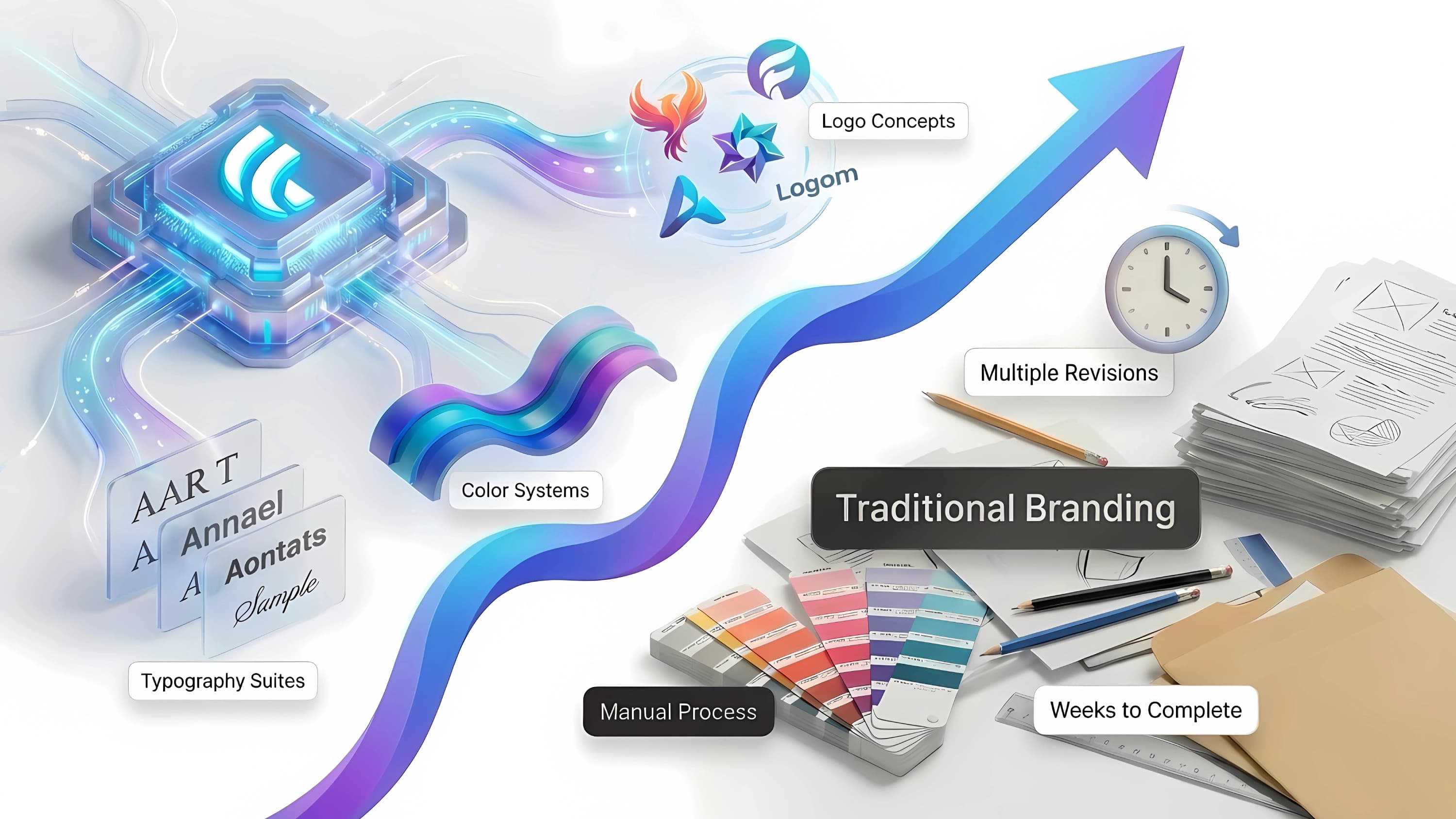
This is where AI-assisted branding platforms can be a practical option. A platform such as Ficonica is generally suitable for early-stage businesses that want to move from a name and industry description to a coordinated visual system without starting with a traditional agency engagement. That can be helpful when speed, budget, and usability matter most.
Still, there are limits. If your project involves extensive research, highly original illustration, packaging systems, complex strategic positioning, or a very specific creative direction, a freelance designer or agency may be the better fit. AI-assisted tools can simplify brand assembly, but they are not a replacement for every kind of branding work.
Common mistakes in brand identity creation
The most common mistake is treating branding as decoration. If the identity is built only around what looks trendy, it may become hard to use consistently across real business materials.
Another mistake is choosing too many colors or fonts. More options can feel exciting at first, but they often create inconsistency later. Small businesses usually benefit from tighter choices they can repeat easily.
A third mistake is ignoring file and format needs. A brand identity is not complete if you only have one logo version in one file type. Businesses usually need assets suitable for websites, social media, documents, and print. The exact file requirements depend on use, but portability matters.
The last major mistake is assuming identity creation solves every brand problem. It does not replace clear messaging, product quality, customer service, or market fit. Visual identity supports the business. It does not do the whole job.
How to know what level of branding you need
The right level depends on your stage, budget, and complexity. If you are validating a business idea or launching quickly, you probably need a clean, usable identity system more than deep brand theory. If your business already has traction but looks inconsistent, a refresh focused on visual alignment may help. If you are building a larger company with multiple audiences, packaging lines, or a more competitive design category, more custom work may be worth it.
A helpful question is not "How much branding can I buy?" but "What do I need to use every week?" If the answer includes a website, social posts, proposals, and a few print items, then your identity should be built around those real uses.
A practical way to think about brand identity creation
Think of brand identity creation as building the kit your business uses to show up consistently. It is part design, part decision-making, and part organization. The better the system fits your actual workflow, the more valuable it becomes.
If you are starting from scratch, focus less on making the brand look clever and more on making it usable, repeatable, and appropriate for your business. A clear identity you can apply everywhere is usually more helpful than a flashy one you cannot manage. The right brand system is the one you can actually use tomorrow.