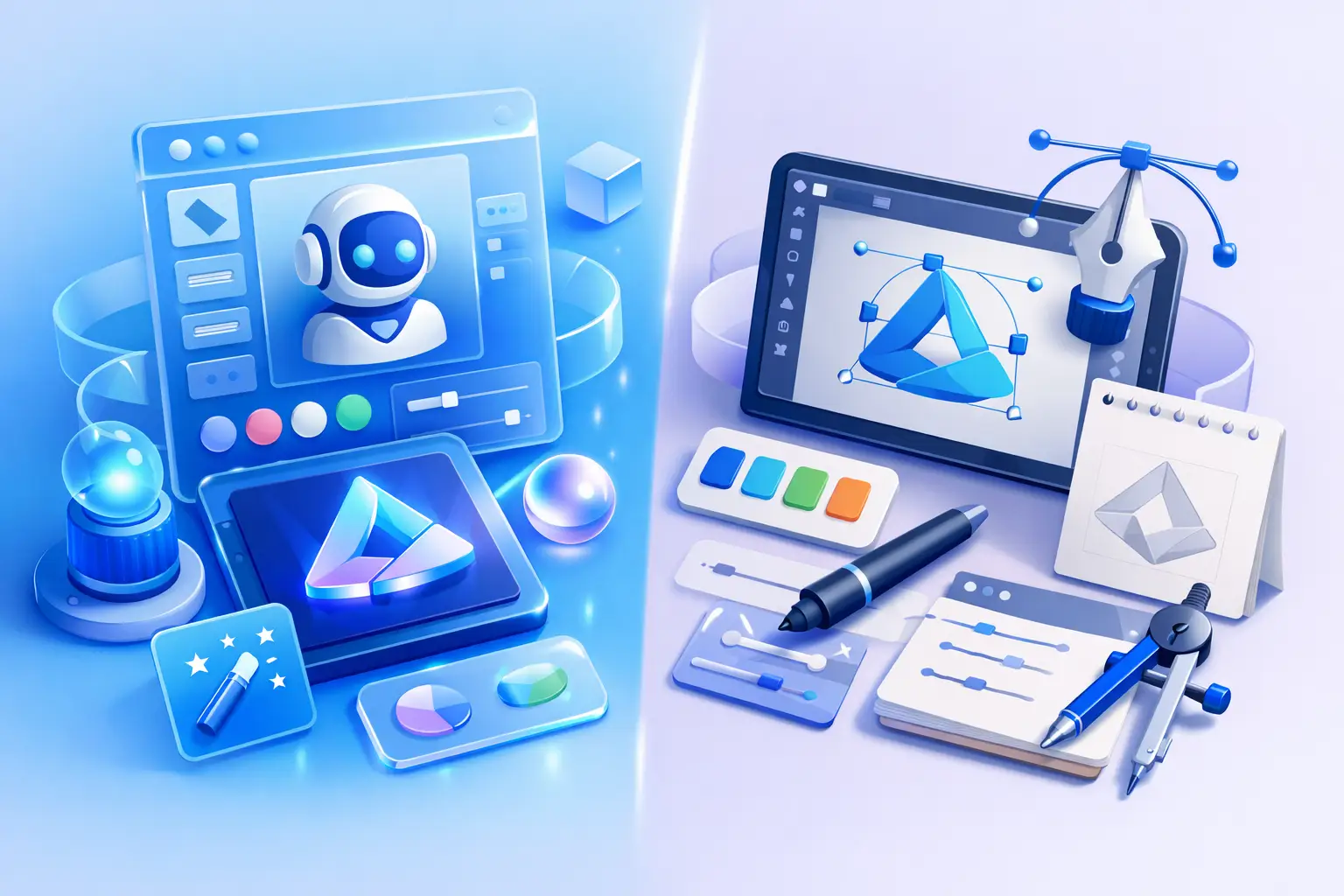
If you need a logo quickly and have a limited budget, the ai logo generator vs designer decision usually comes down to this: AI is generally suitable for early-stage businesses that need a usable visual identity fast, while a designer is usually the better fit when you need deeper strategy, original creative work, or a more customized brand system.
That is the short answer. The more useful answer is that you are not really choosing between good and bad. You are choosing between two different workflows, two different levels of guidance, and two different kinds of outcomes.
AI logo generator vs designer: what changes in practice?
An AI logo generator is built for speed and structure. You enter a business name, select an industry or style direction, and get logo concepts, often with matching colors, fonts, and supporting brand materials. This is appealing when you are launching a side business, testing a startup idea, opening an online store, or cleaning up a brand that currently looks inconsistent.
A designer works differently. Instead of starting with a preset system, they usually start with questions. What do you sell? Who are you trying to reach? Where will the brand appear first? What already exists in your category? That process may lead to a stronger custom result, but it also takes more time, more back-and-forth, and usually more budget.
For many small businesses, the real issue is not whether AI can make a logo. It can. The issue is whether a logo by itself is enough for what the business needs next.
When an AI logo generator makes sense
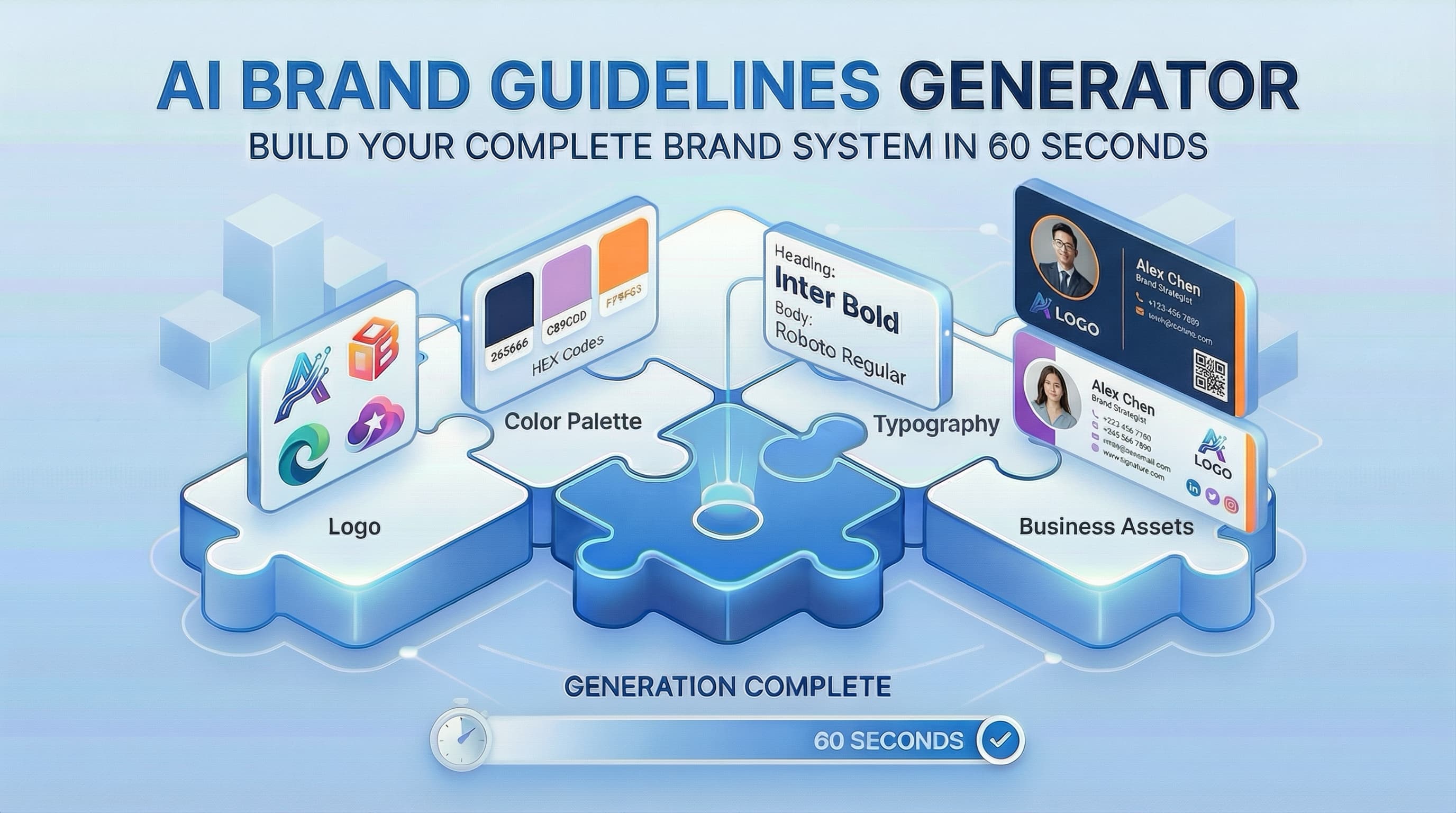
AI branding tools are generally suitable when your biggest problem is getting from nothing to something usable. A lot of founders do not need a long discovery process on day one. They need a logo, a color palette, font pairing, and assets they can actually use on a website, Instagram profile, invoice, proposal, or business card.
That is where AI can help. It reduces the blank-page problem. Instead of trying to explain design ideas from scratch, you can react to options, refine them, and move forward faster.
This approach may be a good fit if your business is new, your offer is still evolving, or you simply do not want to spend weeks managing a branding project. It is also practical for freelancers, creators, and service businesses that need to look organized and credible without commissioning a full custom identity.
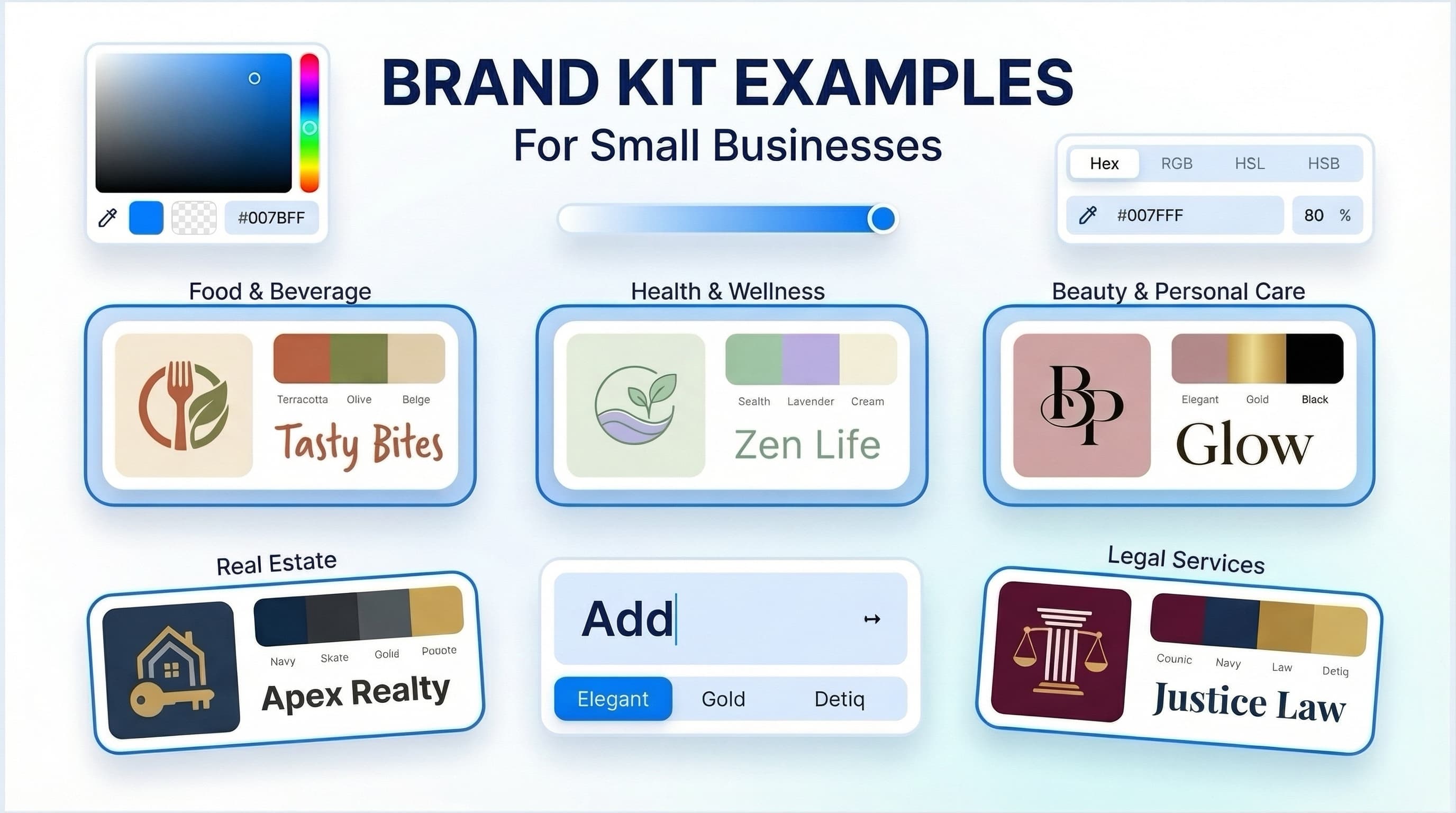
The other advantage is consistency. Many people think they only need a logo, then realize they also need profile images, social graphics, email signatures, and brand rules for colors and fonts. A platform that builds those pieces together can be more useful than buying a standalone logo file and figuring out the rest later.
Still, AI has limits. It may help you produce a clean brand direction, but it does not replace a strategist, illustrator, or senior designer when the brief is complex.
When hiring a designer is the better choice
A designer is usually the stronger option when the work needs interpretation, not just generation.
If your business has multiple audiences, a complicated offer, a crowded competitive space, or a strong point of view that needs to be translated into a distinct visual language, human design judgment matters more. The same is true if you want original illustration, custom lettering, packaging systems, editorial layouts, or a brand built around a very specific creative concept.
Designers are also helpful when you are stuck for reasons AI cannot easily diagnose. Maybe your current branding feels inconsistent because your positioning is unclear. Maybe your team keeps using different colors, different logo versions, and different typography because nobody has defined a system. Maybe you need someone to challenge your assumptions, not just generate more variations.
That said, not every designer offers the same level of thinking. Some focus mostly on visuals. Others provide naming, messaging, research, and broader brand strategy. If you are comparing options fairly, it is worth asking what is actually included rather than assuming all designer-led branding is equally deep.
Cost, time, and revision flexibility
This is often where the ai logo generator vs designer comparison becomes practical.
AI tools are generally faster. If your goal is to launch this week, speed matters. You can explore directions immediately, make adjustments, and download assets without waiting on a project timeline. For businesses with limited cash flow, that lower-friction process can be the difference between getting branded now and postponing everything.
Designers are slower, but the time is not wasted when the project needs custom thinking. A good designer spends time understanding the context, testing ideas, and refining the work. That added time may produce a result that feels more distinctive and more aligned with your business.
Revision style also differs. With AI, you usually control the pace and can test many directions quickly. With a designer, revisions are more conversational. That can be better if you want expert guidance, but it can also be harder if you are unclear on what you want and keep changing direction.
In simple terms, AI tends to maximize speed and access. Designers tend to maximize interpretation and originality.
Quality is not just about the logo
One common mistake is judging both options only by the logo mark.
A business rarely uses its logo in isolation. It uses a profile image, website header, social posts, slide deck, invoice, signage, packaging label, or email footer. That means the better question is not just, "Which logo looks nicer?" It is, "Which option gives me a usable identity system for the places my business actually shows up?"
This matters because branding is visual organization, not marketing magic. A clean logo will not fix unclear positioning, weak offers, or poor customer service. It can, however, help your business look more consistent and easier to recognize.
For small businesses, a coordinated system is often more valuable than an overly ambitious logo concept. If your colors, fonts, and files are easy to use across digital and print materials, that practical consistency may matter more than having the most original symbol in your category.
How to choose based on your business stage
If you are at the idea, MVP, or early-launch stage, AI is often enough. You may not need months of brand exploration before you know what your audience responds to. A clear and usable identity can help you get moving.
If you already have traction and your business is becoming more visible, the calculation may change. Once you are investing more in packaging, presentations, ad creative, physical materials, or a broader team rollout, custom design support may become more worthwhile.
If you are rebranding because your business has outgrown a DIY look, either option could work depending on the gap. If the problem is inconsistency and missing assets, an AI-assisted branding platform may help. If the problem is that your current brand no longer reflects a more mature market position, a designer may be the better investment.
A practical middle ground
This does not have to be an all-or-nothing decision.
Some businesses start with AI to create a clean baseline identity, then hire a designer later when they have clearer positioning, more revenue, or more complex needs. That can be a sensible sequence. It avoids overinvesting too early while still leaving room for custom work later.
For example, an entrepreneur might use a platform such as Ficonica to generate logo concepts, choose colors and fonts, and assemble basic branded assets for launch. Later, if the business expands into packaging, a larger product line, or a more differentiated visual strategy, hiring a designer may make more sense.
That kind of staged approach is often more realistic than pretending every new business needs a full agency engagement from day one.
Questions to ask before you decide
Before choosing either route, consider what you actually need in the next six months. Do you need only a logo, or do you also need social media assets, business cards, email signatures, and a simple brand guide? Are you looking for speed, or do you need a collaborator to shape the direction? Is your business still testing its market, or are you refining an established identity?
Also be honest about your tolerance for ambiguity. If you want many options right away and prefer hands-on control, AI may feel easier. If you want expert interpretation and are comfortable investing more time and money, a designer may be worth it.
The best choice is usually the one that matches your current stage, not the one that sounds most impressive. A practical brand you can use consistently is often more valuable than an aspirational one you are not ready to build yet.
Pick the option that helps you move forward with clarity, then leave room to upgrade when your business gives you a better reason to do so.